Konbini: The Small Stores That Run Asian Cities
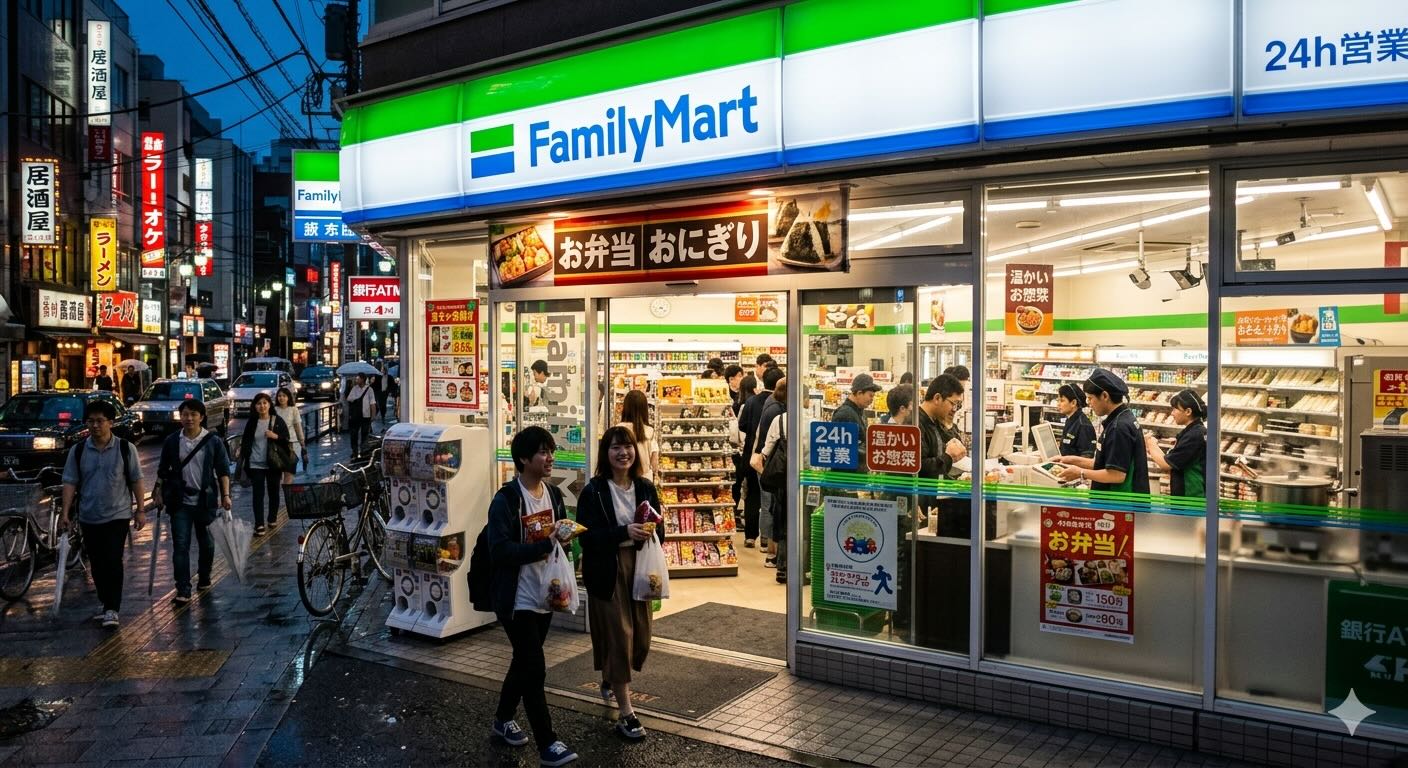
April 11, 2026 2:24 pm Leave your thoughtsLate at night, many Asian cities reveal an unexpected center – not a landmark or transport hub, but a brightly lit convenience store. Restaurants close, offices empty out, and streets quiet down, yet one place remains active. Someone heats a meal, another pays a bill, parcels arrive, students sit with coffee, workers stop briefly before heading home.
The convenience store – the konbini – is open.
Across Japan, Taiwan, Hong Kong, Thailand, Singapore and South Korea, these small shops form one of Asia’s most characteristic urban institutions. Officially retail stores, in practice they function as everyday infrastructure: part café, part service counter, part logistics hub, and informal social space. They are also widely regarded as one of the most trusted and universally used establishments in the city.
More Than Convenience
The term “convenience store” sounds modest. In much of the West it implies emergency purchases and limited choice. In Asia, the concept evolved into something far more integrated into daily life.
Konbini reflect a system optimized for ordinary routines rather than occasional consumption. Open around the clock, clean, predictable and efficient, they remove small but constant frictions from urban living. Visits are rarely planned – the assumption is simply that one will always be nearby.
Inside, the offer is unusually broad. Fresh boxed meals and rice balls sit beside salads, sandwiches and hot snacks. Coffee machines rival dedicated cafés. Shelves carry toiletries, umbrellas, chargers, medicine, stationery and seasonal goods. Customers withdraw cash, pay utilities or taxes, print documents, recharge transport cards, send parcels, purchase tickets or collect online orders. The store’s primary function is not retail alone, but maintaining the flow of everyday life.
Japan – Retail as Infrastructure
Japan refined the model into a nationwide system of remarkable precision. What began as an imported American format became an essential layer of urban organization. Chains such as 7-Eleven, Lawson and FamilyMart operate tens of thousands of locations, each compact yet highly capable.
Fresh meals arrive several times daily through sophisticated logistics networks. Office workers rely on them throughout the day, while residents handle administrative tasks directly at the counter – paying insurance, printing official documents, shipping packages or purchasing event tickets. During earthquakes and other disasters, konbini often reopen first, restoring basic services and stability.
In Japan, retail effectively merged with public utility.
Taiwan – Total Integration
Taiwan extended the concept further. Store density is extraordinary; a convenience store is rarely more than a short walk away.
Here, konbini integrate deeply into civic life. Government services, parcel logistics, payment systems and seating areas coexist in a single accessible environment. Students study, commuters wait out rain, and older residents rest during daily walks. For many routine needs, traditional bank or post office visits become unnecessary.
The convenience store becomes an interface between citizen and city.
Thailand – A Social Refuge
In Thailand, climate shapes the role. Stores – particularly in Bangkok – function as reliable air-conditioned refuges. Affordable food, seating and constant availability turn them into informal neighborhood meeting points.
Students gather after school, night workers pause between shifts, and travelers orient themselves. The emphasis here is less administrative and more social.
Hong Kong – Maximum Function, Minimum Space
Hong Kong’s version reflects extreme urban density. Stores are compact, fast-moving and highly practical. Shift workers grab meals between long hours, residents collect deliveries in buildings with limited storage, and commuters make brief, efficient stops.
The konbini operates as spatial compression – maximum function within minimal space.
Singapore – Order and Reliability
Singapore adapts the model to its culture of efficiency and regulation. Stores resemble hybrids between café and service counter, seamlessly integrated into transport hubs and residential districts.
Prices may be higher, but consistency and reliability remain central.
South Korea – The Urban Living Room
In South Korea, convenience stores evolved into casual lifestyle spaces. Outdoor tables and self-service ramen stations encourage lingering rather than quick transactions. Friends meet late at night, students study, and spontaneous social interactions unfold around inexpensive food and drinks.
The konbini becomes a familiar extension of public space.
Everyone’s Favourite Establishment
Few institutions enjoy such broad acceptance. Office workers, teenagers, elderly residents, delivery drivers and tourists all rely on the same environment. The konbini imposes almost no expectations – no reservation, no dress code, no social signaling.
Its strength lies in neutrality. It does not attempt to impress; it simply functions reliably.
Across the region, similar scenes repeat late at night: homework printed while noodles cook, a quick meal between shifts, bills paid before heading home. Ordinary routines continue without interruption.
Why Europe Built Something Different
Europe and North America developed convenience stores as well, but rarely the same ecosystem. Western cities historically optimized around weekly shopping, home-centered routines and regulated opening hours. Higher labor costs, zoning structures and car-oriented planning limited dense service networks.
Many Asian cities evolved around walking, public transport and continuous urban activity, where frequent small errands replaced large occasional ones.
The Idea Travels West
The konbini model is no longer confined to Asia. In Europe, similar ideas are beginning to appear. Bulgaria’s ubiquitous new Minimart chain – compact, neighborhood-embedded and open late – reflects elements of the same philosophy.
The ecosystem differs, but the direction is recognizable: smaller stores, faster visits, ready meals, coffee and essential services within walking distance. Convenience shifts from occasional luxury toward everyday infrastructure.
As European cities grow denser and daily routines accelerate, the logic behind Asia’s convenience culture becomes increasingly relevant.
The Corner Shop of Everyday Life
Konbini illustrate a particular approach to urban civilization – improving daily life not through spectacle, but through reliability. Thousands of small, predictable spaces quietly support the rhythm of the city.
They are not destinations but constants – places that work without demanding attention.
Cities are often judged by landmarks, yet experienced through ordinary systems that function consistently. In much of Asia, the convenience store has become one of those systems: small, ubiquitous, and essential to how the city actually operates.
Categorised in: Tales
This post was written by rado