How Korea Turns Global Ideas Into Its Own Culture: Borrowing Without Borders
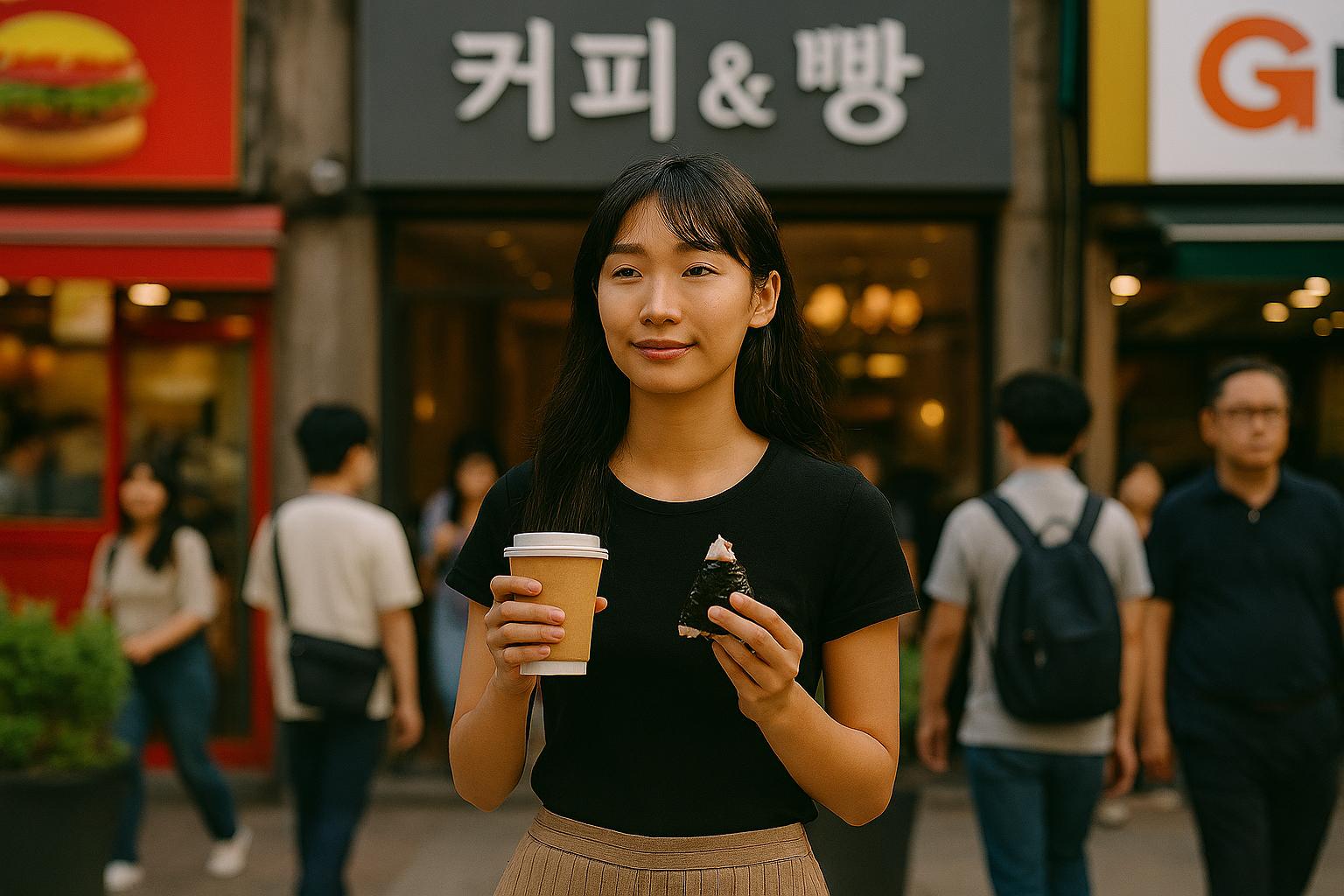
March 29, 2026 5:36 pm Leave your thoughtsSpend an afternoon in Seoul and you might feel as though you’ve crossed continents without ever leaving the city. You sit on tatami mats, eat onigiri, sip a Paris‑inspired latte, later board a train built on French engineering – and all of it somehow feels unmistakably Korean. South Korea is often celebrated as a cultural super‑exporter, thanks to K‑pop, cinema, beauty, design, and technology. But beneath the global success lies a subtler truth: Korea is equally a world‑class cultural importer.
It absorbs ideas from Japan, China, Europe, and the United States – not by imitation, but by transformation. Korea’s identity is less a sealed container and more a highly evolved filtration system, turning borrowed elements into new cultural DNA.
Japan: a close, complicated, and endlessly influential neighbor
Japan’s influence is the easiest to spot, even if few Koreans consciously think of it. After restrictions on Japanese media were lifted in the late 1990s, Japanese products, aesthetics, and lifestyle ideas began entering Seoul rapidly – but they never stayed in original form.
Take onigiri: born in Japan, reborn in Korean convenience stores like GS25 and CU. Korean versions feature local fillings – kimchi tuna, bulgogi, spicy mayo – until the item feels fully Koreanized. Or consider tatami‑inspired cafés and hotels: originally Japanese, but reinterpreted with Korean softness, wellness culture, and Instagram‑ready design cues. The concept is Japanese; the mood is unmistakably Seoul.
Even Japan’s own imports – such as European coffee culture – arrive in Korea through Japan and emerge transformed. Cultural influence becomes a loop, not a line.
China: the deep historical backbone beneath Korean modernity
While Japan shapes Korea’s modern aesthetics, China shapes its historical foundations. Much of Korea’s intellectual, linguistic, and culinary heritage came initially through Chinese channels, only to be reinterpreted over centuries until it became distinctly Korean.
The writing system itself evolved from Chinese characters into Hangul – one of the world’s most efficient phonetic alphabets. Confucian social philosophies, once shared across East Asia, became adapted into uniquely Korean forms of family structure, education intensity, and civic duty.
Even in everyday food, Chinese origins are everywhere but rarely acknowledged. Tteokbokki has roots in Chinese spicy rice cakes; jjajangmyeon is descended from Chinese zhajiangmian; Korean hotpot culture evolved from northern Chinese communal dining. Yet few Koreans perceive these as Chinese; centuries of reinterpretation have woven them so deeply into national identity that they are simply “Korean.”
The United States: consumer culture, Hollywood, and the global lifestyle template
If China provided historical foundations and Japan offered regional inspiration, the United States has shaped Korea’s modern lifestyle. American culture entered heavily during and after the Korean War, but Korea didn’t simply adopt it – it overclocked it.
Fast food chains like McDonald’s and KFC entered the Korean market only to be out‑innovated by Korean menu adaptations, delivery infrastructure, and service speed. Korean fried chicken – now a global phenomenon – began as an American import but became one of the most Korean foods imaginable.
Hollywood established a template for entertainment, which Korea then used as a launchpad. K‑dramas borrow American production structures but infuse them with Korean emotional cadence; K‑pop borrows elements from American pop, R&B, and hip-hop but transforms them through Korea’s rigorous training systems and visual storytelling.
Seoul’s urban landscape – wide roads, big signage, neon, late‑night commercial culture – carries an American imprint, yet the execution feels entirely local. Korea receives U.S. cultural signals and turns the amplitude up to eleven.
Europe: coffee, minimalism, and high‑speed modernity
Europe’s influence is visible in Korea’s café culture, design, and infrastructure. The lineage is beautifully tangled: Paris and Vienna inspired Japanese kissaten, which in turn inspired Korean cafés – but Korea elevated the concept. In Seoul, the café is not just a place to drink coffee; it is architecture, lifestyle, self‑expression, and aesthetic identity. Buildings are designed around latte foam, light fixtures, and camera angles.
France also played a pivotal role in Korea’s industrial modernization. When Korea built its high‑speed KTX rail system in the 1990s, it chose French TGV technology as a base. Korean engineers studied alongside French counterparts before developing their own systems, eventually surpassing the original in reliability and integration. What began as French engineering became one of Korea’s proudest technological achievements.
Borrowing as a superpower: Korea’s creative adaptation model
From Japanese snacks and Chinese cuisine to American music and European trains, Korea’s strategy is consistent. Economists call it creative adaptation – a process that works like this:
- Import an external idea or system.
- Improve it through Korean innovation, efficiency, or aesthetics.
- Integrate it into daily Korean life so deeply it stops feeling foreign.
- Export the transformed version back to the world as “Korean.”
K‑pop draws from American R&B and hip-hop but adds choreographic precision, idol training, visual identity, and fan‑community systems.
K‑beauty merges French dermatology with Korean botanicals and manufacturing agility.
Korean cuisine absorbs Chinese and Japanese ideas and transforms them into something brighter, spicier, more social, more Korean.
Korean tech companies began with Japanese industrial models and American software models, but surpassed both through relentless iteration.
Korea’s cultural identity is not defined by purity, but by mastery.
Where origins dissolve and Korea emerges
Walk through Seoul today and the cultural merging becomes invisible. A Japanese‑inspired café serves European coffee brewed on an Italian machine inside a building designed with Scandinavian minimalism, decorated with Korean ceramics, playing American indie music, and filled with customers who just ordered chicken inspired by the American South, cooked the Korean way, served with Chinese-style pickled radish.
Outside, a high-speed train passes – born in France, perfected in Korea.
And no one thinks about any of this as borrowed.
It has all become part of a single cultural organism.
South Korea thrives not by resisting external influence but by metabolizing it – transforming global ideas into a uniquely Korean form of modern life. In doing so, it models something rare: a culture that is confident enough to borrow from everyone, yet strong enough to remain unmistakably itself.
AI Podcast
This post was written by rado