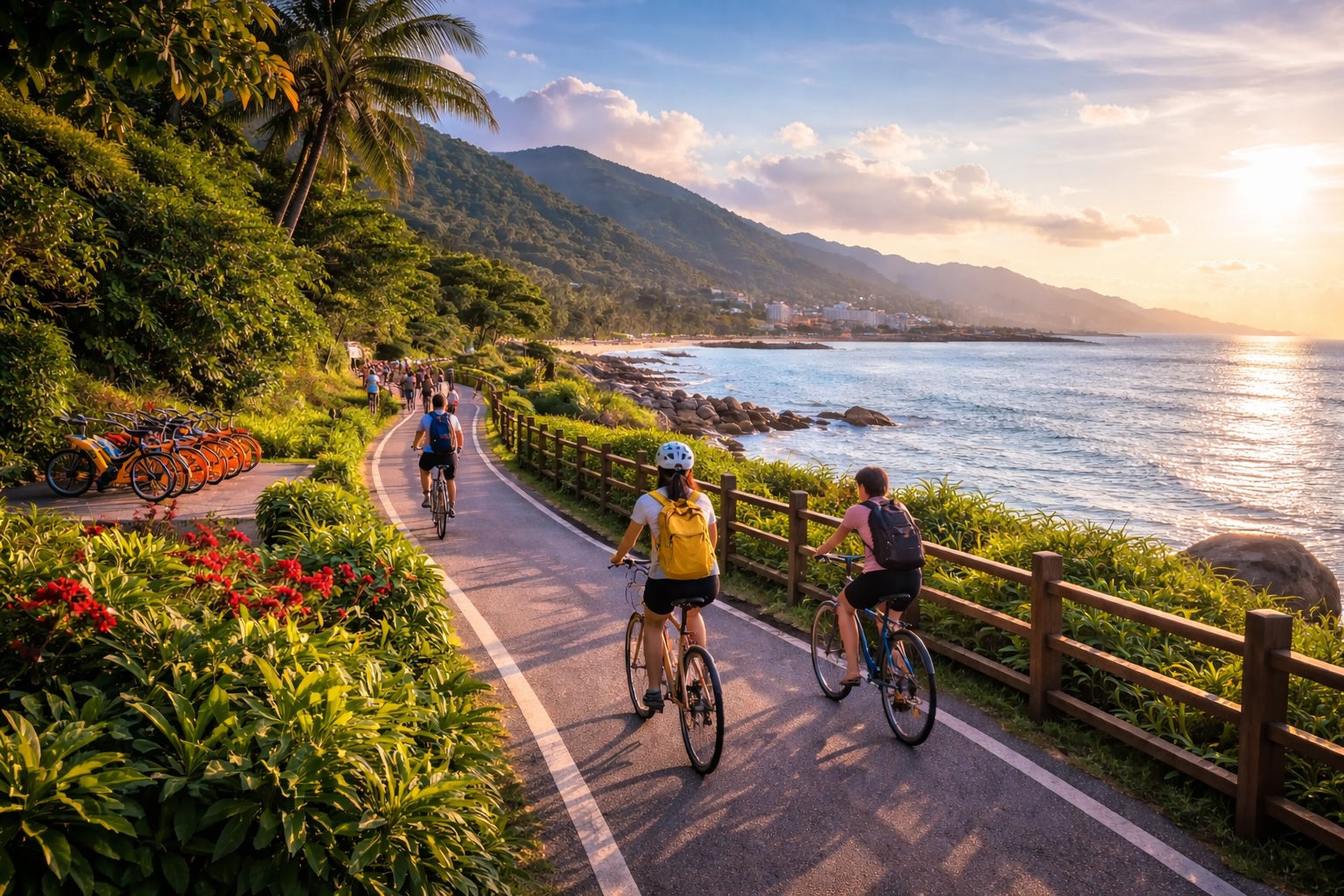
Taiwan: The Island Built for Bicycles
April 10, 2026 12:25 pm Leave your thoughtsTaiwan rarely appears in conversations about great cycling destinations. The island is better known for semiconductors, night markets and dense cities filled with scooters. At first glance, it hardly looks like a place designed for two wheels. Yet within minutes of arriving, visitors notice something unexpected: bicycles are everywhere. Office workers glide along riverside paths, retirees ride through parks at dawn, and students casually unlock rental bikes outside metro stations. Cycling here is not a niche hobby. It is part of ordinary life.
This did not happen by accident. Over several decades, Taiwan quietly built a system in which bicycles became convenient, practical and socially normal – not through grand declarations, but through thousands of small, consistent decisions.
A Bicycle Nation by Design
The experience often begins with a rental bike. In cities like Taipei, rows of bright orange bicycles wait outside metro exits, convenience stores and residential streets. The public system YouBike works with remarkable simplicity: registration takes minutes, prices are low and stations appear every few hundred meters. Returning a bike is rarely a concern because another dock is always nearby.
Unlike many bike-sharing programs elsewhere, these bicycles are not primarily for visitors. Locals use them for commuting, shopping and short daily trips. The bicycle becomes the natural extension of public transport – the final kilometer between the station and home. No special effort is required, and that may be Taiwan’s greatest achievement: cycling feels easier than not cycling.
This everyday practicality is closely tied to Taiwan’s industrial story. The island is also the hidden center of the global bicycle industry, led by companies such as Giant Manufacturing Co., today the world’s largest bicycle manufacturer. What began as contract production for foreign brands gradually evolved into world-class engineering and design. High-end bicycles ridden across Europe and North America often originate from Taiwanese factories.
The connection between manufacturing and lifestyle matters. Taiwan does not treat bicycles as nostalgic symbols or environmental statements. They are respected objects of engineering, everyday tools produced locally and used daily – a rare alignment between industry and culture.
Infrastructure That Makes Cycling Feel Normal
The real surprise, however, is how seamlessly the environment supports riders. Long riverside cycling highways cross major cities, separated from traffic and carefully maintained. Clear route markings guide cyclists from urban neighborhoods into farmland, coastal roads and mountain valleys without complicated planning.
Trains allow bicycles on many routes, making one-way trips simple. Convenience stores double as unofficial service stations where riders refill water, rest or shelter from sudden tropical rain. Repair stands appear along popular paths, while many hotels openly welcome cyclists with storage areas, washing facilities and bicycle-friendly layouts.
None of this feels experimental or promotional. Cycling infrastructure in Taiwan does not demand attention; it quietly removes friction. The result is an environment where people of all ages ride because it makes sense, not because they identify as cyclists.
An Island Meant to Be Circled
Taiwan’s geography completes the story. Mountains rise steeply from the sea, coastal highways trace dramatic cliffs above the Pacific Ocean, and smaller roads connect fishing towns, temples and rice fields. These landscapes have turned the idea of cycling around the entire island into a widely shared aspiration.
Completing the round-island route is not an extreme sporting challenge. Students attempt it during holidays, retirees take their time over several weeks, and friends ride individual segments together. The journey functions almost as a modern rite of passage – a way to rediscover the island slowly, at the pace of conversation and changing scenery.
Mobility at Human Scale
Taiwan demonstrates that cycling culture does not emerge from sudden revolutions or strict bans on cars. It grows when transportation policy, industry and everyday habits reinforce one another over time. Affordable rentals invite participation, local manufacturing builds expertise and pride, and consistent urban planning ensures bicycles remain practical long after initial enthusiasm fades.
In many places, cycling is treated as an alternative lifestyle. In Taiwan, it is simply another normal choice. The island did not try to become a cycling paradise. It merely made the bicycle convenient enough that people chose it themselves – and in doing so, quietly redesigned mobility around human scale.
This post was written by rado