The Country Where Nobody Waits for the Courier
April 8, 2026 7:15 pm 2 CommentsIn Europe, receiving a package often feels like a small bureaucratic ordeal. The courier arrives when you are not home. A note is left behind. You reschedule. You wait again. Sometimes an entire day ends up organized around the arrival of a single box.
In many Chinese cities, this problem has almost disappeared. Not because couriers are more punctual or more polite, but because the city itself works differently. Deliveries rarely reach the apartment door. The packages simply wait for you.
When the Neighborhood Becomes a Post Office
Urban China is built around enormous gated residential compounds – neighborhoods with security gates, internal streets, and dozens of residential towers. A single complex can house the population of a small town. For couriers, that would normally mean endless entrances, elevators, and lost hours.
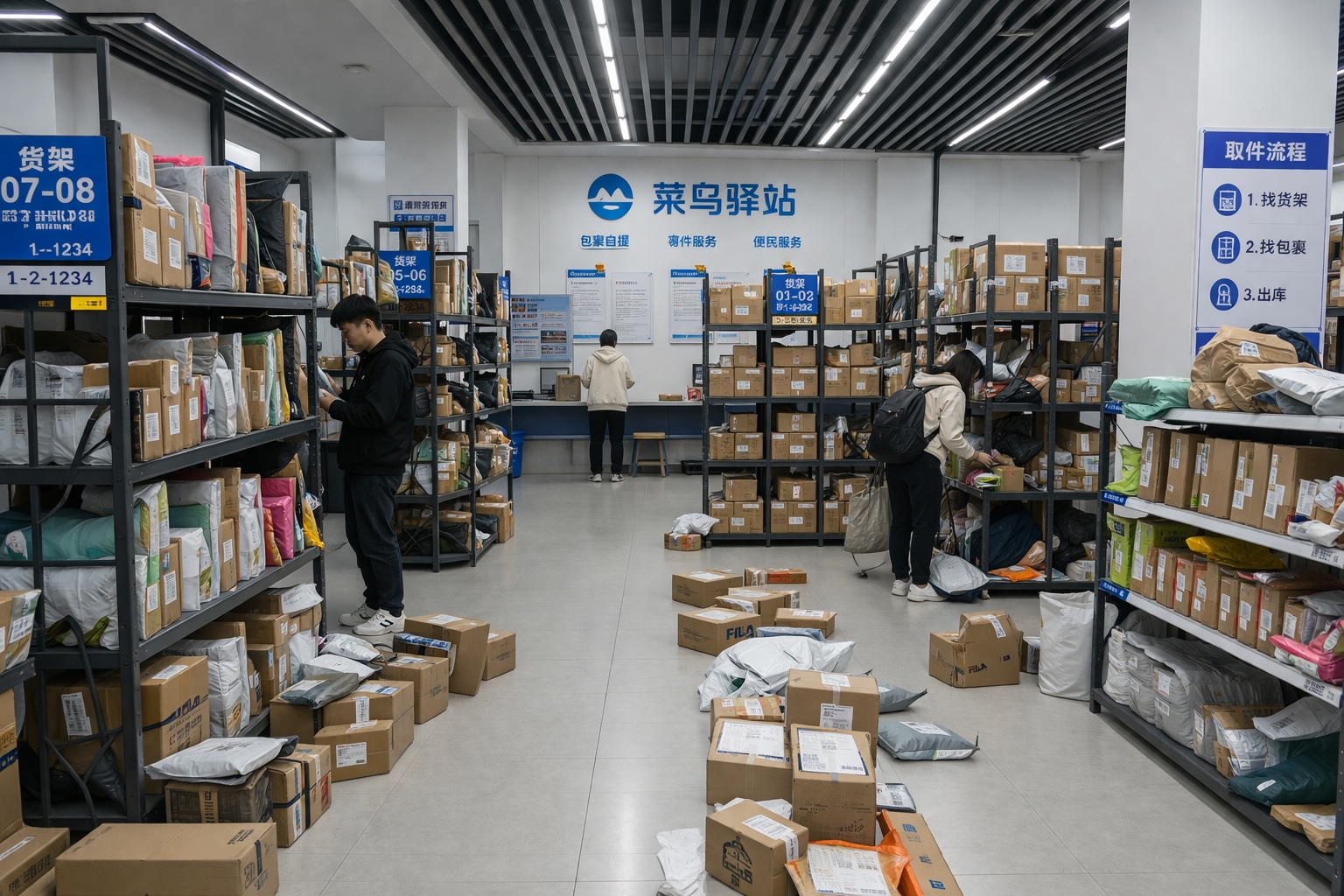
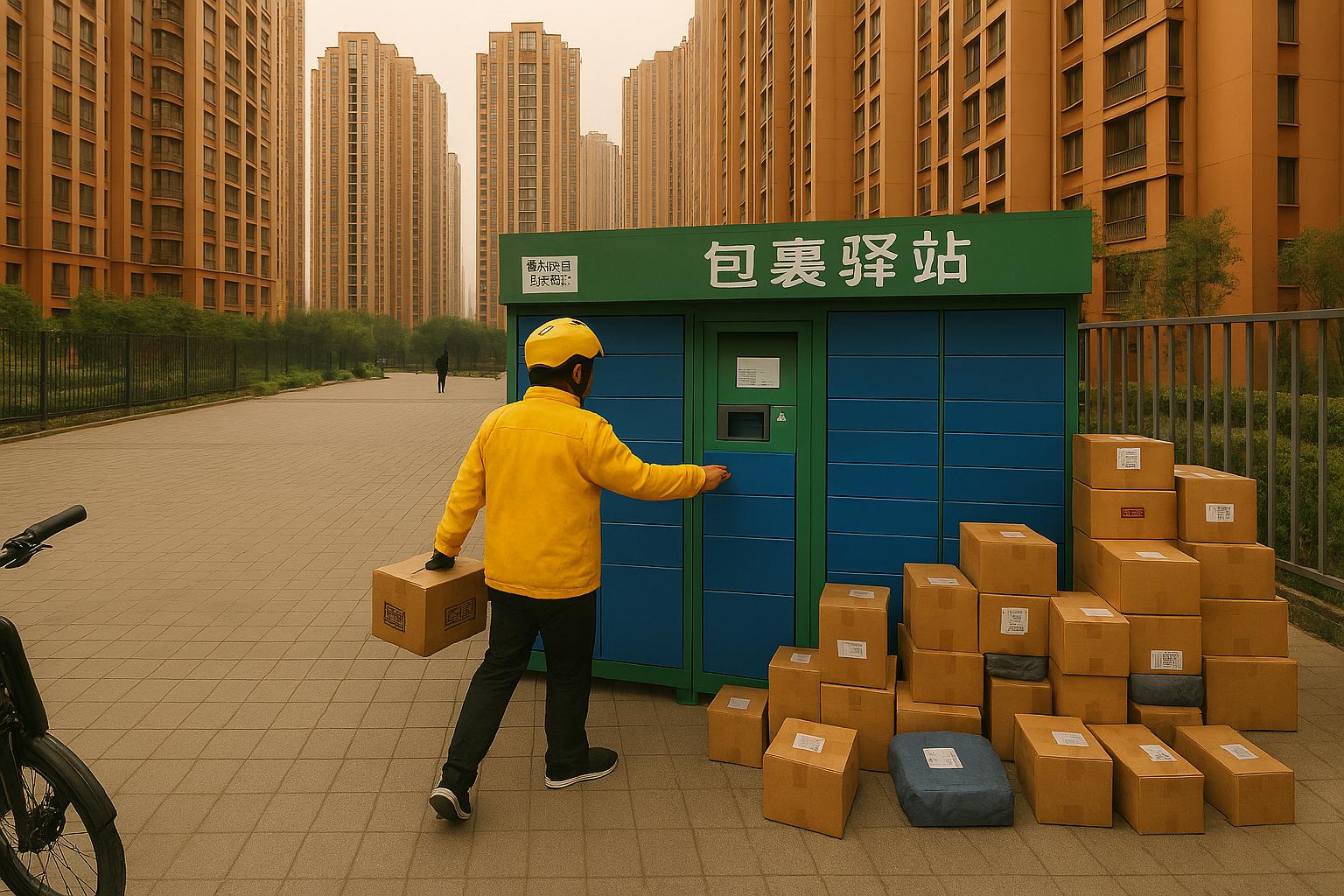
When e-commerce exploded in the 2010s, door-to-door delivery stopped being practical. Instead of trying to make couriers faster, Chinese cities redesigned the final step of logistics. Inside residential compounds appeared parcel lockers, staffed pickup points, and dedicated mail rooms – small neighborhood warehouses serving all courier companies at once.
The courier drops off dozens or even hundreds of packages in one place. Residents receive a code on their phone and collect deliveries whenever they like – after work, late at night, or the next day. No coordination, no missed visits, no waiting at home. The most expensive part of delivery – the last hundred meters – effectively disappears.
Over time, the system expanded beyond online shopping. Food delivery, laundry services, and everyday errands follow the same logic. Logistics stop at the edge of the compound, while residents complete the final few steps themselves.
Trusting a Wall of Parcels
At first glance, the idea seems risky – thousands of packages left outside individual apartments. In practice, it works remarkably well. Residential compounds are controlled environments with security staff, cameras, and restricted access. Every parcel is digitally registered, and lockers open only with individual codes.
Theft exists but remains relatively uncommon. Part of the explanation is technological, but another part is social: the same neighbors use these spaces every day, and they quickly become an accepted element of shared order. Packages do not feel abandoned – they are simply parked temporarily.
The system ultimately optimizes the city rather than the individual transaction. Couriers deliver far more parcels per day, while residents gain something more valuable than personalized service: freedom from schedules.
Why the Model Emerged in China – and Why It’s Hard to Copy
China reached this model first because it combines conditions rarely found together elsewhere: extremely high residential density, massive e-commerce adoption, and neighborhoods designed as self-contained gated units. With hundreds of millions of parcels moving daily, door-to-door delivery became economically impossible.
Europe and other regions do have parcel lockers, but they are usually located near supermarkets or courier offices. China’s difference is architectural: logistics have been moved inside the residential environment itself. The parcel room becomes as ordinary a feature of the neighborhood as the elevator or underground parking.
This is difficult to replicate directly. European cities are more dispersed, buildings are smaller, shared spaces are limited, and cultural expectations still frame delivery as a personal service between customer and courier. The result is a system caught in between – neither fully automated nor especially convenient.
After spending time in a Chinese city, the contrast becomes striking. European delivery begins to feel almost Kafkaesque: people adapt their schedules to the courier, the delivery window, and the route of a van. In China, the logic is reversed – the city absorbs the inconvenience instead of the resident.
Parcel rooms rarely appear in travel stories. There is nothing spectacular about them. Yet these quiet pieces of infrastructure reveal how a modern megacity truly functions.
Delivery is no longer an event but part of the urban system itself – which may be why nobody waits for the doorbell anymore.
Categorised in: Tales
This post was written by rado
2 Comments
wow
helpful